
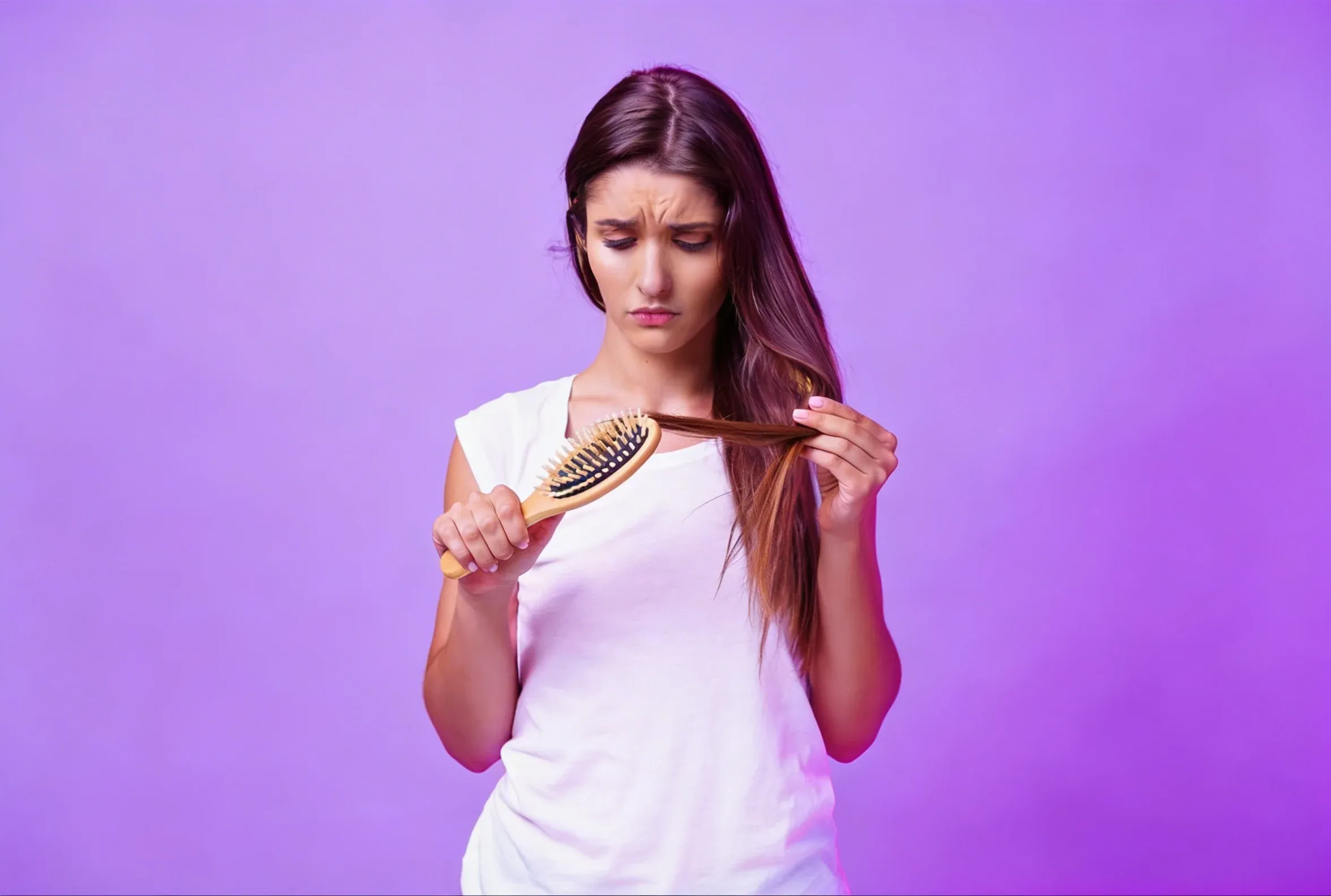

Patient consulting about hair restoration options at RegalMed Clinic Fort Myers

Hair Loss & Thinning Treatment in Fort Myers, FL

Restore Your Natural Fullness

Your Hair Loss & Thinning Treatment at a glance:

Common In:Adults 30+
Primary Causes:Hormones, Genetics, Nutrition
Treatment Time:30-60 minutes
Results:3-6 months
Close-up showing hair thinning patterns at RegalMed Clinic

What Is Hair Loss & Thinning?

Recognizing the Signs

Hair loss and thinning—clinically termed alopecia—describes a progressive reduction in hair density, diameter, and growth cycle activity. This condition involves the gradual miniaturization of hair follicles, where thick terminal hairs are replaced by fine vellus hairs, ultimately leading to visible scalp exposure and reduced overall volume.

When you notice more hair in your brush than usual, a widening part line, or thinning at the temples, you are observing the early stages of follicular miniaturization. Many patients first become aware of changes when ponytails feel thinner, styling becomes difficult, or they can see their scalp through their hair under bright lighting.

Hair loss affects more than appearance—it strikes at personal identity and self-confidence. Many patients describe avoiding photographs, changing hairstyles to conceal thinning areas, or feeling anxious in social situations where overhead lighting might reveal their hair loss to others.

Illustration of hair follicle miniaturization process at RegalMed Clinic Fort Myers

Why Hair Loss & Thinning Happens

Understanding the Root Causes

The hair growth cycle consists of three phases: anagen (active growth lasting 2-7 years), catagen (transition), and telogen (resting/shedding). Healthy adults shed 50-100 hairs daily as part of normal cycling. When the anagen phase shortens or more follicles enter telogen prematurely, net hair density declines—a process that can reduce visible hair volume by 50% before most people notice thinning.

In androgenetic alopecia—the most common form—the enzyme 5-alpha reductase converts testosterone into dihydrotestosterone (DHT), which binds to susceptible follicles and progressively shrinks them. Each successive growth cycle produces thinner, shorter, and lighter hairs until the follicle can no longer produce visible hair.

Nutritional deficiencies compound hormonal effects significantly. Iron, ferritin, zinc, biotin, and vitamin D are all essential cofactors in the keratin synthesis pathway. Studies show that up to 72% of women with hair loss have concurrent nutritional deficiencies that impair the follicle's ability to produce strong, healthy hair shafts.


Diagram showing hair follicle growth signaling at RegalMed Clinic

The Follicular Microenvironment

How Growth Signals Affect Hair Health

Each hair follicle exists within a complex microenvironment regulated by dermal papilla cells—specialized signaling cells at the base of the follicle that control the hair growth cycle. These cells release growth factors including Wnt, BMP, and FGF that determine whether a follicle remains in active growth or transitions to its resting phase.

When dermal papilla cells become stressed by inflammation, oxidative damage, or hormonal changes, their signaling capacity diminishes. Research in the Journal of Investigative Dermatology demonstrates that aged dermal papilla cells produce 40-60% fewer growth factors compared to younger cells, directly contributing to the shortened anagen phase observed in thinning hair.

Exosome therapy and stem cell approaches target this microenvironment directly. By delivering concentrated growth factors and signaling molecules to dermal papilla cells, these regenerative treatments aim to restore the follicle's natural growth signaling and reverse the miniaturization process before follicles become permanently dormant.

Lifestyle factors affecting hair health at RegalMed Clinic Fort Myers

What Accelerates Hair Loss & Thinning?

Identifying Your Triggers

01

Hormonal Changes

DHT sensitivity, thyroid imbalance, menopause, and postpartum hormonal shifts all disrupt the hair growth cycle and accelerate follicular miniaturization.

02

Nutritional Deficiencies

Low iron, ferritin, zinc, biotin, and vitamin D impair keratin production and weaken the hair shaft, leading to increased breakage and shedding.

03

Genetic Predisposition

Family history of androgenetic alopecia determines follicle sensitivity to DHT, with pattern hair loss affecting approximately 50% of men and 40% of women by age 50.

04

Chronic Stress

Prolonged stress triggers telogen effluvium, pushing large numbers of follicles into the resting phase simultaneously and causing noticeable diffuse thinning 2-3 months later.

05

Inflammatory Conditions

Scalp inflammation from autoimmune conditions, seborrheic dermatitis, or chronic tension damages the follicular environment and impairs healthy regrowth.

06

Medication & Lifestyle

Certain medications, crash diets, excessive heat styling, and tight hairstyles contribute to accelerated hair loss through chemical or mechanical follicle damage.

RegalMed Clinic interior in Fort Myers Florida

Why Choose RegalMed Clinic

Expert Care in Fort Myers

  • Root-Cause Diagnostics
  • Regenerative Therapies
  • Physician-Formulated Supplements
  • Personalized Treatment Plans

Treatment Options Comparison

Finding Your Best Approach

Treatment Best For Session Time Results Timeline Maintenance
RF Microneedling + Dermatopapillary Exosomes Active hair follicle stimulation 60-90 minutes 3-6 months 2-3 sessions/year
Exosome Therapy Follicle regeneration 30-60 minutes 3-6 months 2-3 sessions/year
Stem Cell Therapy Advanced hair restoration 60-90 minutes 4-6 months Annual evaluation
Beyond Biotin — Hair, Skin & Nails Daily nutritional support Daily supplement 2-4 months Ongoing daily use
Cellular Nutrition Assay Identifying deficiencies Blood draw visit 1-2 weeks for results Retest every 6-12 months
Patient concerned about hair thinning at RegalMed Clinic Fort Myers

You May Be Experiencing Hair Loss If...

Recognizing When to Seek Help

  • Widening Part Line
  • Excessive Shedding
  • Thinning Ponytail
  • Receding Hairline
  • Scalp Visibility
  • Texture Changes

Frequently Asked Questions

About Hair Loss & Thinning

01 What causes hair loss?

Hair loss results from a combination of genetic predisposition, hormonal changes (particularly DHT sensitivity), nutritional deficiencies, stress, and aging. The specific cause varies by individual, which is why Dr. Farag recommends diagnostic testing to identify your unique contributing factors.

02 Can exosome therapy regrow hair?

Exosome therapy delivers concentrated growth factors to hair follicles, stimulating dormant follicles and promoting new growth. Clinical studies show significant improvement in hair density and thickness, with most patients noticing visible changes within 3-6 months of treatment.

03 What supplements help with hair loss?

Key nutrients for hair health include biotin, iron, zinc, vitamin D, and omega-3 fatty acids. Our Beyond Biotin formula is physician-formulated to provide these essential cofactors in optimal doses. A Cellular Nutrition Assay can identify your specific deficiencies for targeted supplementation.

04 Is hair loss reversible?

Many forms of hair loss are treatable, especially when addressed early. Follicles that have miniaturized but not yet become permanently dormant can often be reactivated with regenerative therapies. The earlier you seek treatment, the more options are typically available.

05 How do I know which hair loss treatment is right for me?

A comprehensive evaluation with Dr. Farag includes assessing your hair loss pattern, medical history, nutritional status, and hormonal profile. This information guides a personalized treatment plan that may combine regenerative therapies with nutritional support.

06 Can stress really cause hair loss?

Yes, chronic stress triggers telogen effluvium, a condition where large numbers of hair follicles prematurely enter the resting phase. This typically causes noticeable diffuse thinning 2-3 months after a stressful period. Addressing underlying stress is an important part of any hair restoration plan.

07 Can RF microneedling with exosomes help with hair loss?

Yes. RegalMed Clinic offers RF microneedling combined with dermatopapillary exosomes as a targeted treatment for hair thinning and loss. The RF energy stimulates the scalp's healing response, while dermatopapillary exosomes — signaling molecules derived from the dermal papilla cells that control follicular activity — are delivered directly into the scalp to encourage dormant follicles back into the growth cycle. Results typically begin to appear within 3–6 months, and most patients benefit from 2–3 sessions per year.

Location15750 New Hampshire Ct, STE D
Fort Myers, FL, 33908

Schedule Your Consultation

Scientific References